
Back to blog
3D Scanning1 min read
Why 3D scanning matters for socket fit
A practical look at how capturing the residual limb in 3D creates a better foundation for patient-specific design.
By Bion3D Team
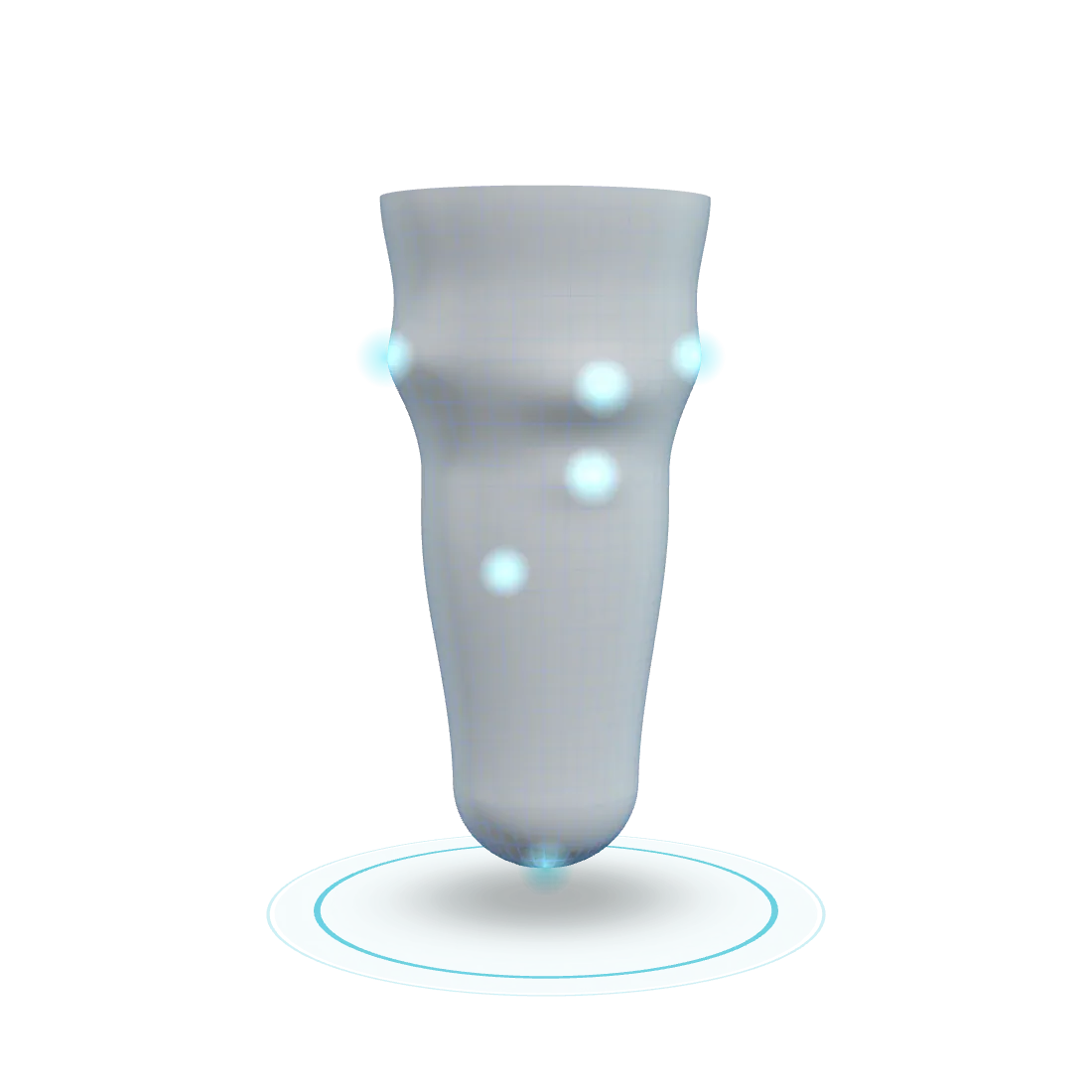
Every socket begins with the individual. A 3D scan records the shape of the residual limb as a digital model that can be measured, compared and reused — something a single plaster cast cannot offer.
From scan to design
A good scan is the starting point, not the end result. In Bion3D the raw scan is cleaned, anatomical landmarks are identified, and the geometry is prepared for design. From there the prosthetist builds the socket directly around the patient’s anatomy.
Tips for a reliable scan
- Mark key anatomical landmarks before scanning.
- Keep the limb still and well supported.
- Scan with even coverage, including the distal end.
- Review the mesh for holes or noise before moving to design.
A consistent capture process makes every later step — modification, validation and manufacturing — more predictable.